Sunday, June 9, 2024

WYETH


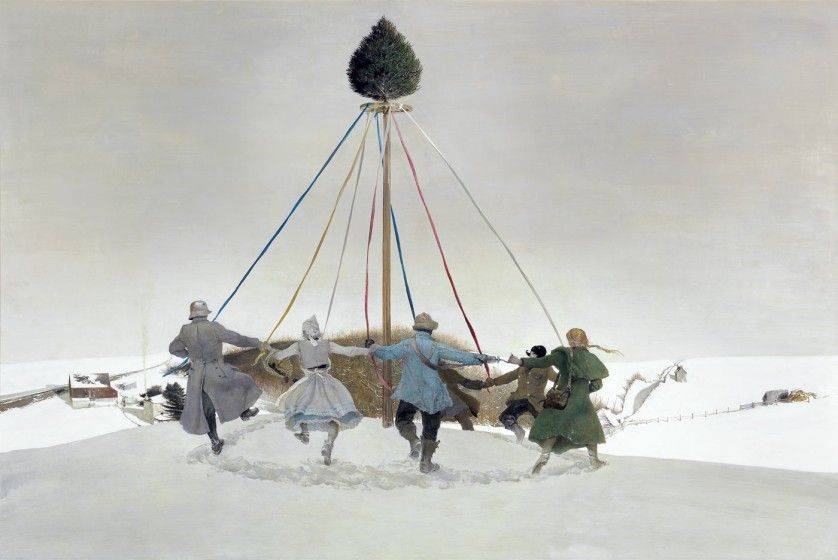
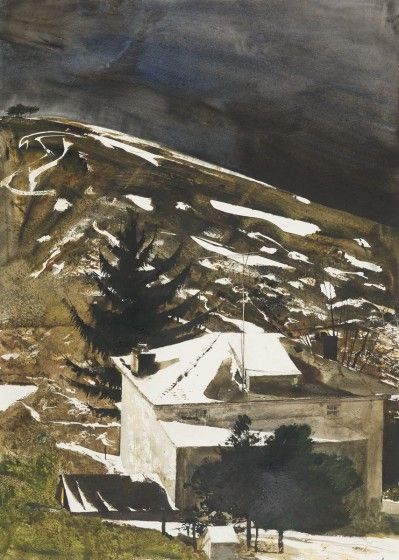
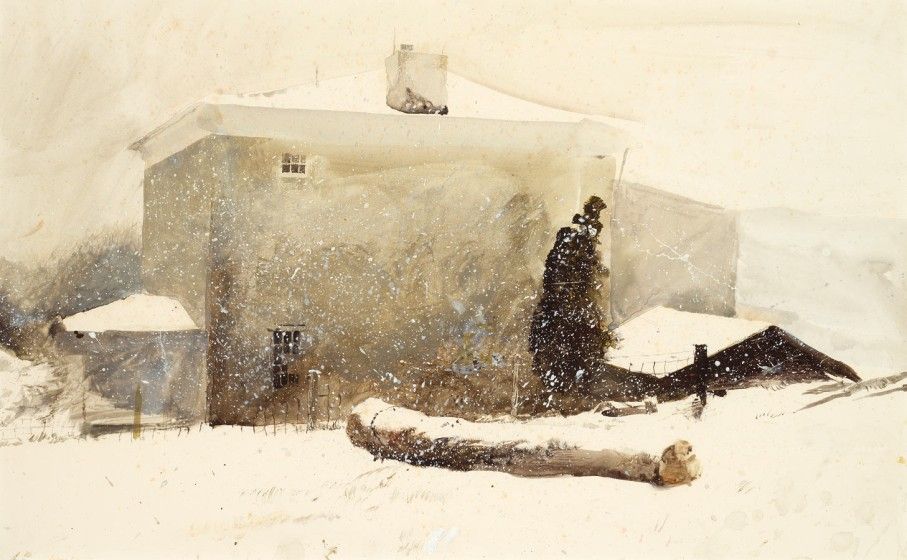
To mark the 25th anniversary of the transition of Kuerner Farm from a family home into a public site visited and sketched by thousands annually, the Brandywine (which owns Kuerner Farm) and Reynolda (itself the owner of an important Kuerner watercolor), have joined forces to co-organize Andrew Wyeth at Kuerner Farm: The Eye of the Earth.

Arbor Acres
Aldersgate Square

  • Reynolda House Museum of American Art: February 13 – May 25, 2025

Friday, May 24, 2024

LIFE IS SPENT


British Museum
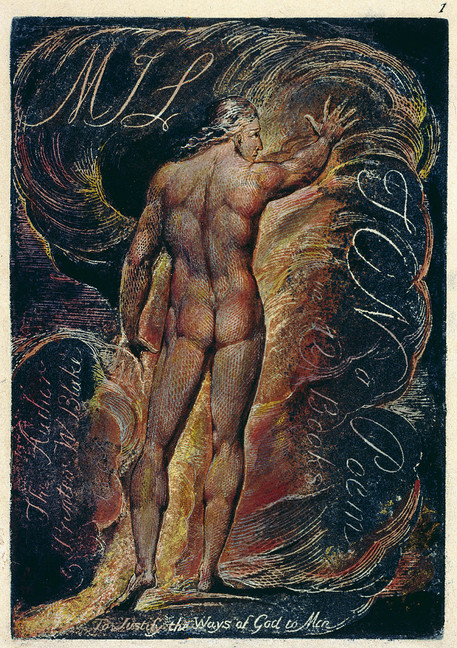
Milton
Plate 1

John  Milton

When I consider how my light is spent,
   Ere half my days, in this dark world and wide,
   And that one Talent which is death to hide
   Lodged with me useless, though my Soul more bent
To serve therewith my Maker, and present
   My true account, lest he returning chide;
   “Doth God exact day-labour, light denied?”
   I fondly ask. But patience, to prevent
That murmur, soon replies, “God doth not need
   Either man’s work or his own gifts; who best
   Bear his mild yoke, they serve him best. His state
Is Kingly. Thousands at his bidding speed
   And post o’er Land and Ocean without rest:
   They also serve who only stand and wait.”

Friday, May 17, 2024

Buried Life

Caricature By James Tissot - Published in Vanity Fair, 11 November 1871

 The Buried Life

Light flows our war of mocking words, and yet,
Behold, with tears mine eyes are wet!
I feel a nameless sadness o'er me roll.
Yes, yes, we know that we can jest,
We know, we know that we can smile!
But there's a something in this breast,
To which thy light words bring no rest,
And thy gay smiles no anodyne.
Give me thy hand, and hush awhile,
And turn those limpid eyes on mine,
And let me read there, love! thy inmost soul.

Alas! is even love too weak
To unlock the heart, and let it speak?
Are even lovers powerless to reveal
To one another what indeed they feel?
I knew the mass of men conceal'd
Their thoughts, for fear that if reveal'd
They would by other men be met
With blank indifference, or with blame reproved;
I knew they lived and moved
Trick'd in disguises, alien to the rest
Of men, and alien to themselves—and yet
The same heart beats in every human breast!

But we, my love!—doth a like spell benumb
Our hearts, our voices?—must we too be dumb?

Ah! well for us, if even we,
Even for a moment, can get free
Our heart, and have our lips unchain'd;
For that which seals them hath been deep-ordain'd!

Fate, which foresaw
How frivolous a baby man would be—
By what distractions he would be possess'd,
How he would pour himself in every strife,
And well-nigh change his own identity—
That it might keep from his capricious play
His genuine self, and force him to obey
Even in his own despite his being's law,
Bade through the deep recesses of our breast
The unregarded river of our life
Pursue with indiscernible flow its way;
And that we should not see
The buried stream, and seem to be
Eddying at large in blind uncertainty,
Though driving on with it eternally.

But often, in the world's most crowded streets,
But often, in the din of strife,
There rises an unspeakable desire
After the knowledge of our buried life;
A thirst to spend our fire and restless force
In tracking out our true, original course;
A longing to inquire
Into the mystery of this heart which beats
So wild, so deep in us—to know
Whence our lives come and where they go.
And many a man in his own breast then delves,
But deep enough, alas! none ever mines.
And we have been on many thousand lines,
And we have shown, on each, spirit and power;
But hardly have we, for one little hour,
Been on our own line, have we been ourselves—
Hardly had skill to utter one of all
The nameless feelings that course through our breast,
But they course on for ever unexpress'd.
And long we try in vain to speak and act
Our hidden self, and what we say and do
Is eloquent, is well—but 't is not true!
And then we will no more be rack'd
With inward striving, and demand
Of all the thousand nothings of the hour
Their stupefying power;
Ah yes, and they benumb us at our call!
Yet still, from time to time, vague and forlorn,
From the soul's subterranean depth upborne
As from an infinitely distant land,
Come airs, and floating echoes, and convey
A melancholy into all our day.
Only—but this is rare—
When a belovèd hand is laid in ours,
When, jaded with the rush and glare
Of the interminable hours,
Our eyes can in another's eyes read clear,
When our world-deafen'd ear
Is by the tones of a loved voice caress'd—
A bolt is shot back somewhere in our breast,
And a lost pulse of feeling stirs again.
The eye sinks inward, and the heart lies plain,
And what we mean, we say, and what we would, we know.
A man becomes aware of his life's flow,
And hears its winding murmur; and he sees
The meadows where it glides, the sun, the breeze.

And there arrives a lull in the hot race
Wherein he doth for ever chase
That flying and elusive shadow, rest.
An air of coolness plays upon his face,
And an unwonted calm pervades his breast.
And then he thinks he knows
The hills where his life rose,
And the sea where it goes.
 Sohrab and Rustum  The Kite Runner

AURORA

May 12, 2024

 Paul took this time exposure at Rocky Knob on the Parkway.

I drove up to Rocky Knob last night to try to see the aurora. Couldn't pick up much more than a light glow by eye, but the camera with a 30 second exposure got some color. There were a lot of people up there and most of my exposures were ruined by car lights, but here are a few that came out ok.

Wednesday, May 15, 2024

SOKRATES


Yale Center For British Art
Socrates: A Visionary Head

"This was on the 10th of December 1825... in answer to a question from me, he said, 'The Spirits told me.' This lead me to say: Socrates used pretty much the same language. He spoke of his Genius. Now, what affinity or resemblance do you suppose was there between the Genius which inspired Socrates and your Spirits? He smiled, and for once it seemed to me as if he had a feeling of vanity gratified. 'The same as in our countenances.' He paused and said, 'I was Socrates'—and then as if he had gone too far in that—'or a sort of brother. I must have had conversations with him. So I had with Jesus Christ. I have an obscure recollection of having been with both of them.'" 

Reminiscences of Henry Crab Robinson

On Plate 93 of Jerusalem Blake pictured three accusers and labeled them 'Anytus Melitus & Lycon', the names of three men who were involved in the proceedings against Socrates which led to the guilty verdict and his subsequent death. Blake connects the condemnation of Socrates to that of Jesus by pointing out that the accusers of both men thought their victims 'Pernicious' men. Blake puts himself in the category with Socrates and Jesus by picturing in the image an imaginative representation not of men involved in his trial, but the three Hunt brothers, who destroyed his reputation as an artist and imputed insanity to him through their published criticism in the Examiner. The pointing hand, seen six times in the image, was associated with the Hunts, whom Blake personified as 'Hand' in Jerusalem.
Jerusalem, Plate 93, (E 253)
"Anytus Melitus & Lycon thought Socrates a
Very Pernicious Man   So Caiphas thought Jesus"

Mary Renault, The Last of the Wine, Page 363.

"We have entreated many things of the gods, Alexias. Sometimes they gave, and sometimes they saw it otherwise. So today I petitioned as Sokrates once taught us: "'All knowing Zeus, give me what is best for me. Avert evil from me, though it be the thing prayed for; and give me the good which from ignorance I do not ask for.'"


Thursday, March 28, 2024

THE SPIRIT OF THE LORD IS UPON ME


Luke 4:

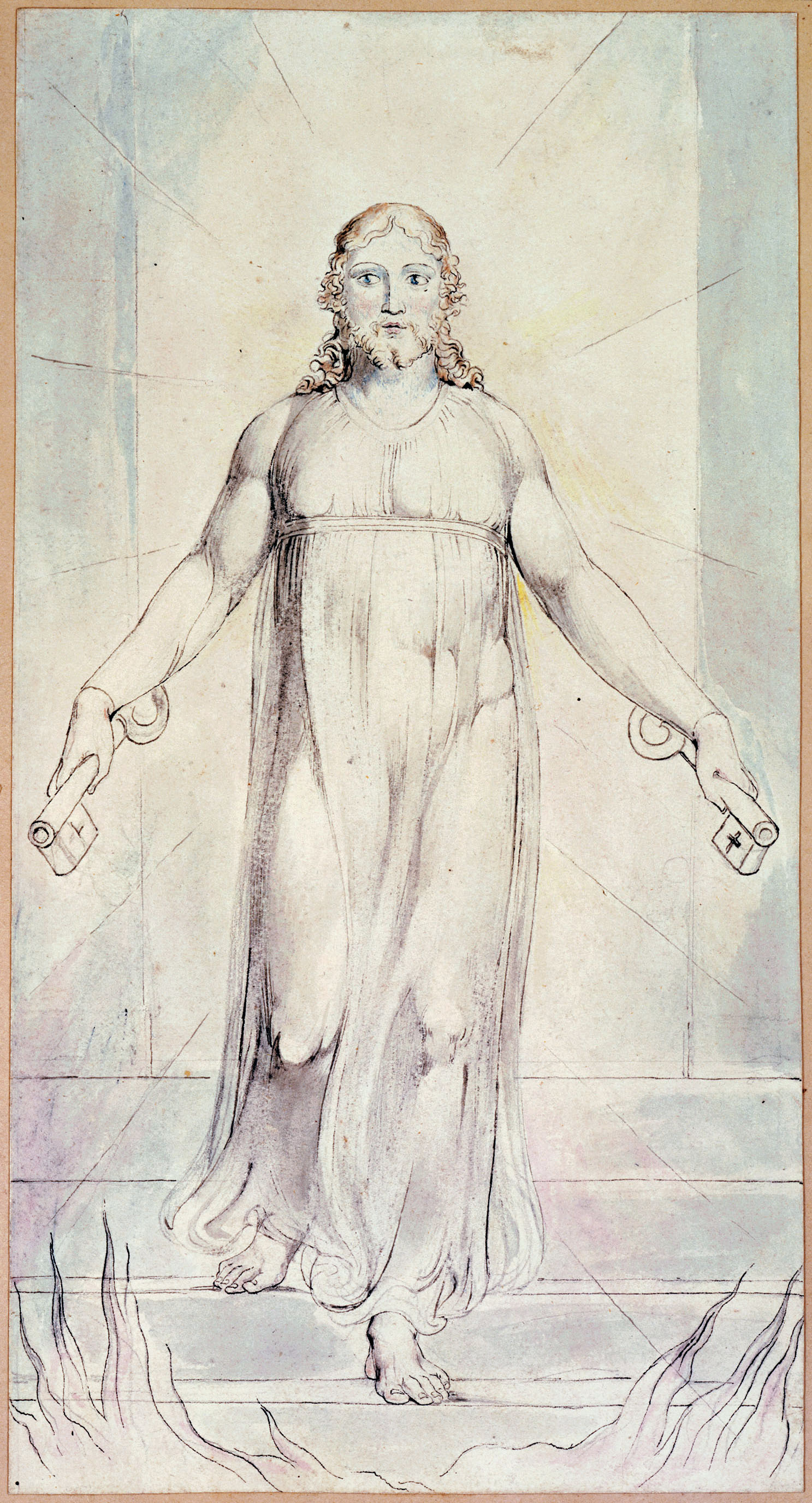
Then he came to Nazareth where he had been brought up and, according to his custom, went to the synagogue on the Sabbath day. He stood up to read the scriptures and the book of the prophet Isaiah was handed to him. He opened the book and found the place where these words are written—‘The Spirit of the Lord is upon me, because he has anointed me to preach the Gospel to the poor. He has sent me to heal the brokenhearted, to preach deliverance to the captives and recovery of sight to the blind, to set at liberty those who are oppressed, to preach the acceptable year of the Lord’.

Luke 4

[16] And he came to Nazareth, where he had been brought up: and, as his custom was, he went into the synagogue on the sabbath day, and stood up for to read.
[17] And there was delivered unto him the book of the prophet Esaias. And when he had opened the book, he found the place where it was written,
[18] The Spirit of the Lord is upon me, because he hath anointed me to preach the gospel to the poor; he hath sent me to heal the brokenhearted, to preach deliverance to the captives, and recovering of sight to the blind, to set at liberty them that are bruised,
[19] To preach the acceptable year of the Lord.
[20] And he closed the book, and he gave it again to the minister, and sat down. And the eyes of all them that were in the synagogue were fastened on him.
[21] And he began to say unto them, This day is this scripture fulfilled in your ears.

Isaiah 61

[1] The Spirit of the Lord GOD is upon me; because the LORD hath anointed me to preach good tidings unto the meek; he hath sent me to bind up the brokenhearted, to proclaim liberty to the captives, and the opening of the prison to them that are bound;
[2] To proclaim the acceptable year of the LORD, 


WILDFLOWERS 2024

EMILY ALLEN GARDEN

TRILLIUM

TRILLIUM

TRILLIUM

FERN FIDDLEHEADS

TRILIUM


BLUEBELLS

JACK-IN-THE-PULPIT

WINDFLOWER

TROUTLILLY

SOLOMON'S SEAL

RATTLESNAKE FERN

TOOTHWORT

TRILLIUM